
AI in real estate is not about replacing your pre-sales team with chatbots — it is about giving every executive the prioritisation instincts of your best performer. From scoring inbound leads to drafting follow-ups and nudging stalled deals toward booking, AI amplifies human judgment where it matters most.
Where AI delivers immediate value in pre-sales
The highest-impact AI use cases in Indian real estate sales are practical, not futuristic. Lead scoring, response drafting, next-best-action suggestions, and booking nudges address the daily bottlenecks that slow teams down — too many leads, too little time, and inconsistent follow-up quality.
Intelligent lead scoring beyond source tags
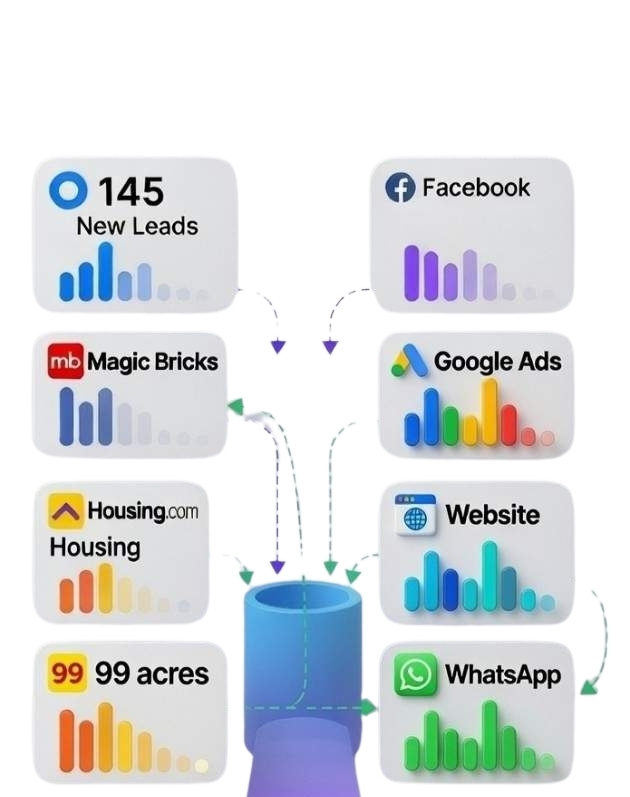
A portal lead is not automatically cold. AI models weigh budget match, enquiry specificity, response behaviour, and historical conversion patterns from similar buyer profiles. A buyer asking for a specific 3BHK on the 10th floor with east facing scores higher than a generic 'send brochure' request. Leady Nest's scoring surfaces hot leads at the top of each executive's queue every morning.
AI-assisted follow-up drafting
- Generate personalised WhatsApp messages referencing the buyer's last site visit and preferred unit
- Draft email summaries with payment plan comparisons tailored to the buyer's budget band
- Suggest objection-handling talking points based on logged feedback from previous interactions
- Maintain your brand tone while cutting drafting time from 10 minutes to under 60 seconds
Next-best-action recommendations
Stalled deals often die from indecision, not rejection. AI analyses pipeline stage, days since last touch, and buyer signals to recommend whether to schedule a revisit, share a limited-time offer, escalate to a senior closer, or move the lead to long-term nurture. Executives spend less time deciding what to do and more time doing it.
Booking nudges that respect the buyer journey
Aggressive automation kills trust. Smart booking nudges trigger at the right moments — after a positive site visit, when a preferred unit enters hold expiry, or when a festival offer aligns with the buyer's stated timeline. The AI Booking Assistant in Leady Nest identifies these windows and suggests messages that feel consultative, not pushy.
“Our team was sceptical until they saw AI prioritise a lead that booked within 48 hours — a lead they would have buried under 200 portal enquiries.”
— VP Sales, residential developer in Hyderabad
What AI should not do
High-value real estate purchases require human trust. AI should not conduct unsupervised negotiations, make pricing commitments, or replace relationship-building on site visits. Keep humans in the loop for final approvals, and use AI to eliminate administrative drag around those conversations.
Data quality determines AI quality
AI models are only as good as the CRM data feeding them. Enforce consistent stage updates, log site visit feedback, and capture budget ranges accurately. Teams that treat data hygiene as a discipline see compounding returns from AI features over time.
Getting your team to trust AI tools
Start with low-risk wins — lead prioritisation and draft suggestions — before rolling out automated nudges. Show executives the conversion lift on AI-prioritised leads versus their manual picks. Transparency builds trust faster than mandating tool usage from day one.
Key takeaways
- AI lead scoring helps teams focus on buyers most likely to convert, not just the newest enquiries.
- Draft assistance and next-best-action suggestions save hours of admin without removing human judgment.
- Booking nudges work best when timed to buyer signals — not blasted on a fixed schedule.
- Keep humans in control of pricing, negotiation, and relationship-building on high-value deals.
- Clean CRM data is the foundation — AI amplifies good inputs and bad ones alike.